Enamel is one of the most common materials used for creating a wide range of products, including pins, badges, medals, and jewelry. Enamel types are usually divided into two types, namely, hard enamel and soft enamel types. Knowing the difference between the two types can help you choose the suitable type according to your needs. In this article, we will look into the important features of hard and soft enamels, including their manufacturing processes, looks, durability and usage.
| Feature | Soft Enamel | Hard Enamel |
|---|---|---|
| Base Metal | Zinc alloy | Brass or Copper |
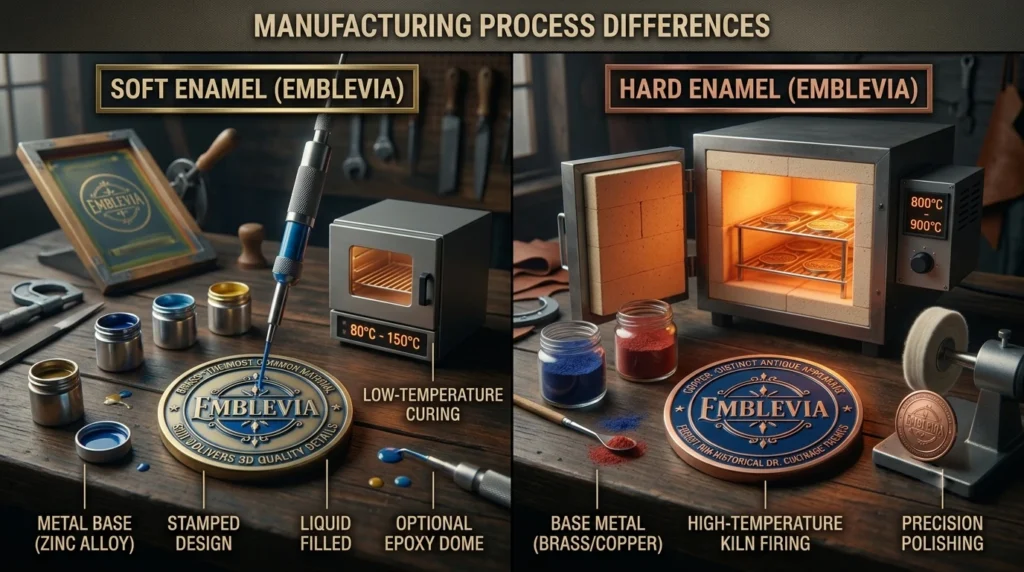
| Manufacturing | Liquid enamel filled, low-temp firing (80-150°C), optional epoxy coating | Powdered enamel filled, high-temp firing (800-900°C), polished |
| Appearance | Textured, tactile 3D feel, raised metal lines | Smooth, flat, polished, flush with metal borders |
| Durability | Good impact resistance, but may fade or scratch over time | Extremely wear-resistant, but brittle and may fracture under strong impact |
| Cost | Budget-friendly | Higher cost |
| Ideal Applications | Corporate badges, promotional gifts, fandom merch, convention pins | High-end jewelry, commemorative coins, corporate awards, brand merch |
Differences in the Manufacturing Process
- Making Soft Enamel Pins: Soft enamel pins typically start off with a metal base made of a zinc alloy due to its affordability. The design makes use of dies and DIY ideas in the making of the metal base. Next, a liquid enamel or resin is poured into the grooves of the metal base either manually or by automated methods. The next stage is to cure the pins by using temperature which is less than 100 degrees Celsius before a clear coat of epoxy is applied to give the pins a shiny appearance.
- Production of Hard Enamel Pins: Hard enamel pins use brass or copper as the raw material as it can hold its shape. After die-extruding the metal base, powdered glass is used to fill in the grooves in the metal. The metal is then dried in high temperature of more than 750 degrees Celsius. The pins may be polished afterward to produce a shiny surface.

Differences_in_the_Manufacturing_Process_between_hard_enamel_and_soft_enamel
Appearance Contrasts
- Soft Enamel Looks: Soft enamel is marked by its rough nature. The enamel is positioned lower as compared to its raised metallic outline which imparts a rough 3D effect to the design. The raised metallic outline of the enamel adds to its brilliance, rendering deeper hues to the design. For this reason, it has an old-world charm and being a collectible.
- Hard Enamel Looks: Hard enamel offers a smoother and sleeker finish as that found in exquisite jewelry. The enamel is on the same plane as the border, resulting in an even and elegant look. This gives it a shining finish as well, with clear colors.
Durability Contrasts
- Soft Enamel Durability: Soft enamel is superior in shock resistance which makes it less susceptible to breakage. Nonetheless, with time, its color may fade away and its surface may get scratches as well.
- Hard Enamel Durability: Hard enamel has excellent resistance to wear and tear and can maintain its color for a longer period of time. On the downside, it is brittle and may break upon impact.
Differences in Application Sectors
- Use of Soft Enamel: Soft enamel is widely used in making business logos, marketing gifts, and sports awards as well. This type is used especially in making other decorative items having several colors such as fan products and carnival badges, among others. Its low price and capability of creating several colors are appealing for people.
- Use of Hard Enamel: Hard enamel is used widely in making top jewelry, masterpiece arts, and medals and documentaries. The use of this type takes place when a high-quality surface is required, for example in anniversary medals and special awards.
Selecting Between the Two
Choosing between soft enamel and hard enamel largely depends upon your specific needs. Soft enamel is perfect for any budget product which features a colorful textured look, useful for intricate designs. This type is very good for items such as artist merchandise, giveaways, and fan products. Hard enamel, however, provides you with an expensive and valuable solution with a classy and smooth look. This kind is commonly used in corporate pins, collectibles, and brands merchandise.
To summarize, both soft and hard enamel have their own features and benefits. стп By knowing those differences in manufacturing processes, looks, durability, and purposes of those two kinds of enamel you will be able to make a correct decision for your purposes.