Custom challenge coins serve as more than simple pieces of metal; they stand for identity, accomplishments and friendships. For numerous agencies, not only military but also corporations having made custom challenge coins is a good way to celebrate events, appreciate people and unite the team. Being a producer of custom challenge coins it is important to know about the process of OEM coin production if you want to create quality products that will satisfy your clients.
1. Design and Conceptualization
The first step in creating bespoke coins for your business starts with designing the coins. This step is where the client’s vision comes to life. Manufacturers collaborate with their clients to develop the size, the shape, and the material of the coins. The regular sizes for challenge coins run from 1.5″ (traditional military size) up to 2.5” or more for the more sophisticated models. The thickness could be as small as 3mm (standard) to 6mm and beyond for more luxurious coins.
Coins don’t have to be circular in shape; unusual shapes like dog tags and shields are also popular among the manufacturers. The designer team creates the digital proof from the client’s request in terms of both sides of the coin, text positioning, the three-dimensional mapping of depth, and separation of enamel colors. If a client has an artwork, then the manufacturer will prepare the files for the coin production. The design will be amended and corrected until the client agrees on it.
2. Die Creation
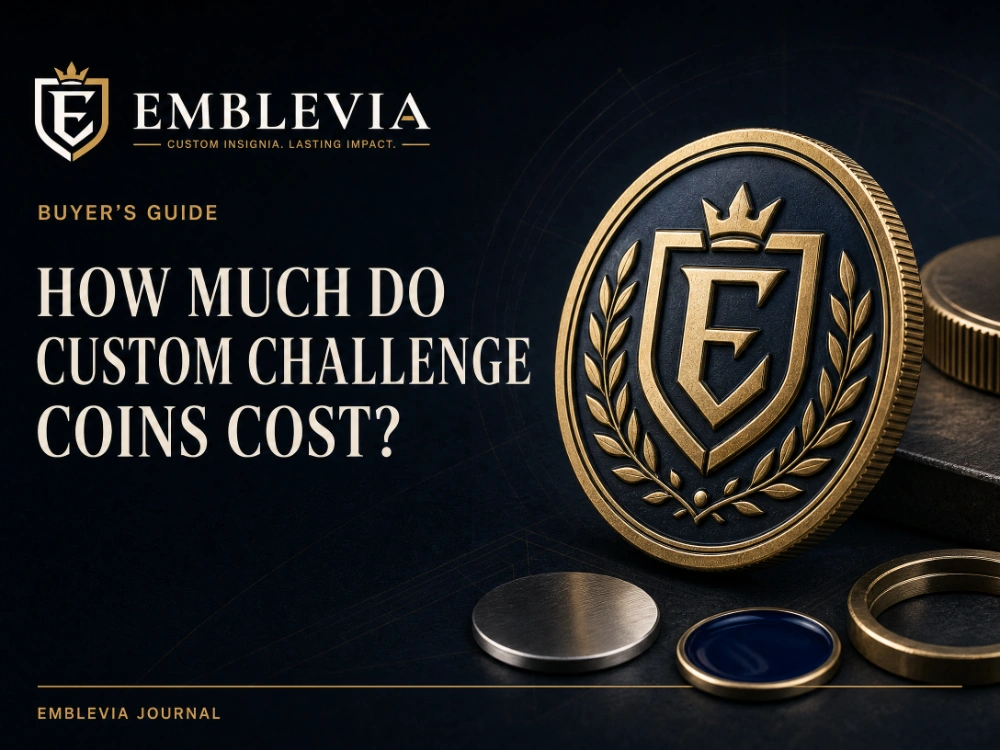
The creation of the die is an important step since its properties define the pressure of the imprint, as well as the fine detail and sharpness of the coin’s inscriptions. Generally, the die is made of hardened steel, which must be etched through CNC machining, EDM, or laser. All of these methods facilitate the accurate execution of the die’s design. After etching, the die’s hardness is improved through heat treatment, thus making it resistant to the high pressure of striking.
3. Selecting the Right Material
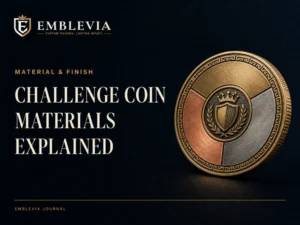
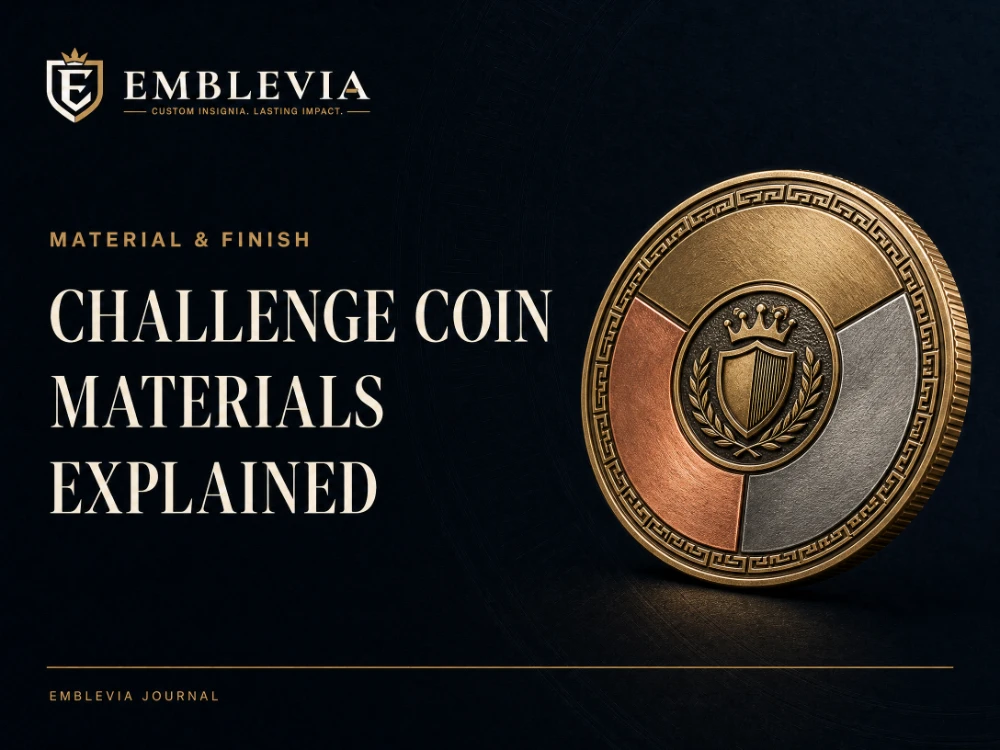
Material selection has a direct effect on the quality, aesthetic, and price of custom challenge coins. Among the most popular options are zinc alloy, which is cost-effective and versatile, thus the perfect choice for crafts that require 3D relief; brass, which has a premium quality and is thus suitable for classic or executive coins; iron/steel, which is strong and quite affordable; stainless steel, which is resistant to corrosion and therefore more suitable for outdoor or marine conditions; and aluminum, which is extremely lightweight and preferred for large coins. A thickness of the material is usually from 2mm to 4mm for the right balance between weight and handling.
Comparison of Common OEM Coin Materials
Material | Characteristics | Advantages | Best For |
Zinc Alloy | Cost-effective, versatile | Perfect for 3D relief crafts | Custom shapes and detailed 3D designs |
Brass | Premium quality | High-end look and feel | Classic or executive challenge coins |
Iron/Steel | Strong, quite affordable | Durable and budget-friendly | Standard, durable everyday use coins |
Stainless Steel | Corrosion-resistant | Withstands harsh environments | Outdoor or marine condition coins |
Aluminum | Extremely lightweight | Easy to handle in larger sizes | Large, oversized custom coins |
4. Coin Striking and Forming
As the dies and the material are ready, the next step is coin striking. Metal blanks are placed between upper and lower dies of a hydraulic press, and the pressure is applied to imprint the design on the surface. As a result of this process, raised logos and other textures are created, and the technician has to monitor pressure and temperature to avoid distortion and provide uniform quality of products.
5. Finishing Touches
This phase involves processes such as metal plating and enamel filling. The most used plating types are gold, silver, antique, and black because they increase the traditional appearance of the coin and give it protection against corrosion. The enamel filling process can also be different. For instance, hard enamel coins require firing to achieve smooth, durable coins which are less likely to change color and more scratch-resistant. Soft enamel coins have a lower price yet the surface is rougher.
6. Quality Inspection and Packaging
During the quality evaluation, the appearance of the coin is checked and the design is verified. The quality inspection also involves checking for imperfections such as scratches. Moreover, the weighing and sizing of the coin will also be conducted to make sure that it meets the specifications.
Once the coins pass the quality check, they are packaged as per the customer’s instructions. The packaging options may vary from velvet pouches to luxury wooden boxes, thus securing the coins as well as increasing their marketing value when gifted.
In conclusion, the entire manufacturing process of customized coins is complex and a lot of emphasis is paid to details during the entire production process. If done properly, it is possible to manufacture good quality customized challenge coins.
FAQ about Custom Challenge Coins Manufacturer OEM Coin Production
What is the standard size and thickness for a custom challenge coin?
The traditional and most common size for military challenge coins is 1.5 inches in diameter, but they can go up to 2.5 inches or more for sophisticated designs. The standard thickness is typically 3mm, but luxury coins can be 6mm thick or more. Material thickness usually ranges from 2mm to 4mm.
What is the difference between hard enamel and soft enamel coins?
Hard enamel coins require a firing process, resulting in a smooth, durable surface that is highly scratch-resistant and less likely to change color. Soft enamel coins are more affordable but have a slightly rougher surface texture, allowing you to feel the raised metal edges.
Can custom challenge coins be made in non-circular shapes?
Yes, absolutely. While circular coins are standard, OEM manufacturers can create custom dies for unusual shapes, such as dog tags, shields, or any specific outline that matches your organization’s branding or artwork.
What materials are best for outdoor or marine challenge coins?
For coins that will be exposed to harsh weather, outdoor environments, or marine conditions, stainless steel is the best choice due to its high resistance to corrosion.
What packaging options are available for finished challenge coins?
After passing quality inspection, coins can be packaged according to client specifications. Options range from simple velvet pouches to premium luxury wooden boxes, which not only protect the coins but also enhance their value as corporate or military gifts.