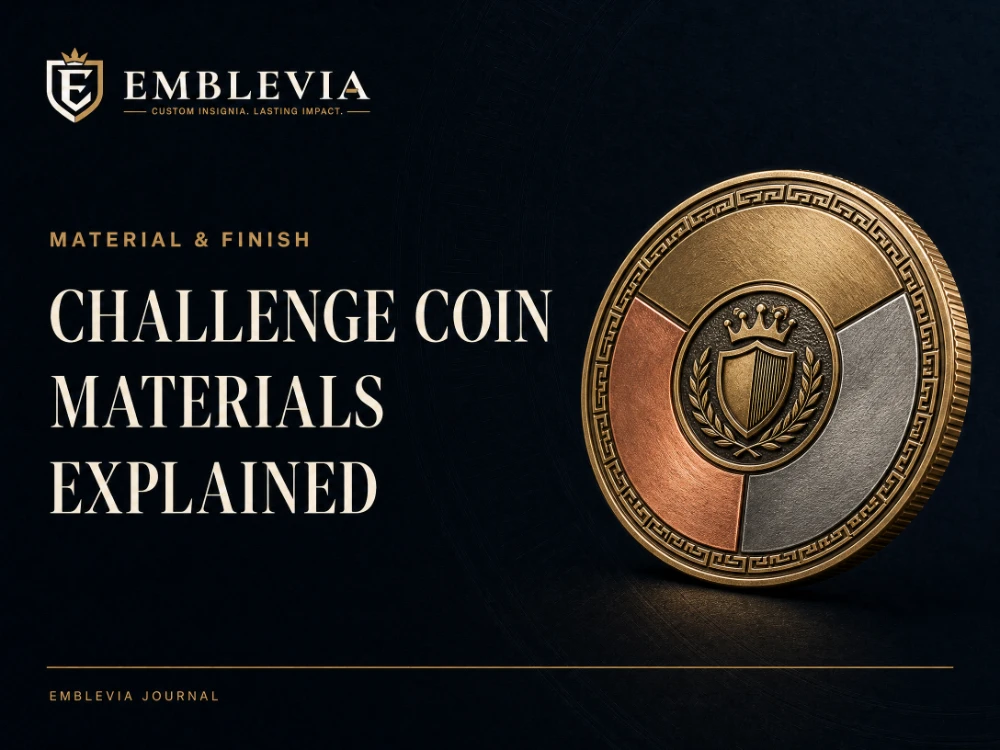
One of the most important decisions of planning your customized challenge coin is selecting right challenge coin materials.
In reality, the challenge coin is more than merely a small metal piece. It can be considered a significant award for troops, their advocates, or clubs and organizations for representing member’s accomplishment as well as identity. The material being used will define the visual image, weight, durability of the coin, the possibilities for designing, and cost of it.
Many customers ask:
“What are challenge coins made of?”
Traditionally challenge coins were made from metal materials such as brass, copper, and zinc alloy. Nowadays, it is possible to make challenge coins from materials such as iron or aluminum.
At Emblevia, we assist our clients in selecting appropriate challange coin materials for them based on project complexity, number of items, budget, and the purpose of use. As a professional manufacturer, we evaluate every project carefully to balance craftsmanship and practicality.
This guide explains the most common challenge coin materials and how to choose the best option for your custom project.
Brass Challenge Coins
Brass has been a popular material for challenge coins since time immemorial.
Brass has been used for military challenge coins for ages because they have a classic look, weighty feel, and a sense of quality. For this reason, brass is used for most military and commemorative coins as it represents their rich history and craftsmanship.
Why Choose Brass for Challenge Coins?
Brass offers several advantages:
Classic appearance
Brass naturally provides a warm golden tone that creates a traditional coin appearance. When combined with antique finishes, brass can produce a timeless look that is often associated with military and ceremonial coins.
Excellent durability
Brass is a strong metal that can withstand frequent handling. This makes it suitable for coins that are designed to be carried, displayed, or passed down as keepsakes.
Premium hand feel
The density of brass gives a challenge coin a substantial weight in the hand. Many customers prefer this because a heavier coin feels more valuable and meaningful.
Brass Challenge Coins for Military Applications
Brass is among the most sought–after materials for military units, veterans organizations, and law enforcement institutions.
Among different metals and finishes, antique gold and antique silver plated brass can bring out each detail in relief, engraved designs and popular symbols, including:
- unit insignias;
- service logos;
- memorial designs;
- achievement awards.
Nevertheless, brass is not suitable for every project. If a project’s design requires complicated 3D sculpting, use of many enamel colors, or if budget must be strictly adhered to, then other materials should be considered.
Zinc Alloy Challenge Coins
Zinc alloy has become one of the most used manufacturing materials for custom challenge coins.
Upon comparisons to traditional coin–making processes such as stamped coins, zinc alloy coins are manufactured through the die casting process instead. As a consequence, manufacturers are capable of producing coins in more intricate shapes and designs that have deeper 3D details.
Why Choose Zinc Alloy for Challenge Coins?
Superior design flexibility
Zinc alloy is ideal for projects that require:
- 3D artwork;
- irregular shapes;
- detailed logos;
- layered designs;
- complex surface textures.
Because casting metal into molds increases designers‘ flexibility in comparison to more commonly used stamped materials.
Cost-effective customization
Zinc alloy is a cost–effective option because it achieves a balance of quality and cost for organizations purchasing large quantities.
The process allows for intricate design while keeping the overall costs low and thus makes zinc alloy a popular option for:
- corporate challenge coins;
- event coins;
- club recognition coins;
- promotional products.
Suitable for modern finishes
Zinc alloy works well with many finishing options, including:
- antique gold;
- antique silver;
- black nickel;
- polished finishes;
- multiple plating combinations.
It can also be used effectively with enamel colors, producing excellent designs while retaining a professional look.
Zinc Alloy vs Brass Challenge Coins
The selection of one over the other often comes down to the design requirements.
Brass gives a more classic and sturdy metal coin feel.
In contrast, zinc alloy allows for more creative flexibility and better cost management.
For clients who want a very detailed custom coins in a specific shape, zinc alloy is usually the best choice.
Copper Challenge Coins
Copper is also a widely used material for premium challenge coins and commemorative challenge coins.
The warm reddish-gold tone of copper means it has one of the most distinctive looks when compared with regular brass or silver coins.
Benefits of Copper Challenge Coins
Unique visual character
Copper has a natural warm tone that creates a vintage and premium appearance.
When combined with antique finishes, copper coins can achieve a handcrafted, collectible style.
Copper can be used for a variety of commemorative projects
Copper is often selected for:
- anniversary coins;
- historical commemorations;
- collector coins;
- premium recognition awards.
Strong traditional appeal
Just like brass, copper provides coins with a good metal feel that is closely associated with traditional coin-making.
Things to Consider While Using Copper
Copper has been chosen primarily for its visual appeal and not for its cost–efficiency qualities.
When it comes to complex designs or projects with high production quantities, copper has certain disadvantages compared to zinc alloys.
Nonetheless, for those who want a remarkable and chic design, copper could be a great option.
Other Challenge Coin Materials
Although brass, copper, and zinc alloy are the most common options, other materials may also be used depending on project requirements.
Iron Challenge Coins
Iron is a practical option for customers looking for affordable custom coins.
It is commonly used for:
- promotional coins;
- large quantity projects;
- simple designs.
Iron coins can still achieve attractive finishes, but they generally do not provide the same premium weight and feel as brass or copper.
Aluminum Challenge Coins
Aluminum is lightweight and suitable for projects where weight reduction is important.
It may be considered for:
- large giveaways;
- lightweight collectibles;
- budget-focused applications.
Premium Metal Options
For special commemorative projects, some customers may explore premium metals or upgraded finishes.
These options are usually selected when the coin’s symbolic value is more important than production cost.
Which Material Should You Choose for Your Custom Challenge Coin?
There is no single “best” material for every challenge coin project.
The right choice depends on several factors:
- who will receive the coin;
- how the coin will be used;
- the complexity of the design;
- production quantity;
- budget requirements;
- the desired look and feel.
As an experienced custom challenge coins manufacturer, Emblevia helps customers evaluate these factors before production begins. A well-selected material can improve both the appearance and long-term value of the finished coin.
Choosing Materials Based on Customer Type
Military Units and Veteran Organizations
For military units, veteran groups, and law enforcement organizations, the traditional feel of a challenge coin is often the most important consideration.
Recommended materials:
Brass
Brass is an excellent choice for customers who want a classic military-style coin with a substantial weight and timeless appearance.
Common combinations include:
- brass base;
- antique gold finish;
- raised and recessed details;
- engraved text or symbols.
Zinc Alloy
Zinc alloy is also widely used for military challenge coins, especially when the design includes:
- detailed 3D elements;
- custom shapes;
- multiple layers;
- complex insignias.
For example, a unit crest featuring aircraft, weapons, buildings, animals, or other detailed elements may benefit from zinc alloy’s casting capability.
For more information about military-focused designs, you can explore our page about Custom Military Challenge Coins.
Organizations, Clubs, and Events
For organizations creating recognition coins, membership coins, or event souvenirs, flexibility and budget efficiency are usually key considerations.
Recommended material:
Zinc Alloy
Zinc alloy is often the preferred choice because it provides:
- detailed customization;
- competitive pricing;
- multiple finish options;
- flexibility for unique designs.
It works particularly well for:
- sports clubs;
- nonprofit organizations;
- conferences;
- competitions;
- achievement awards.
Corporate Brands and Promotional Projects
Companies often use challenge coins as:
- employee recognition awards;
- customer gifts;
- brand marketing tools;
- corporate milestones.
Recommended materials:
Zinc Alloy
For corporate projects, zinc alloy allows companies to create eye-catching designs without unnecessary cost increases.
A custom coin can include:
- company logos;
- brand colors;
- 3D elements;
- special shapes.
For businesses planning larger quantities, material selection can significantly influence the final unit cost.
You can also learn more about pricing factors in our guide:
How Much Do Custom Challenge Coins Cost?
Custom Challenge Coin Materials Comparison Table
Material | Appearance & Feel | Durability | Detail Capability | Weight | Cost Level | Best For |
Brass | Traditional golden tone, premium solid feel | Excellent | Good for classic designs and engraving | Heavy | Medium-High | Military coins, commemorative coins, premium recognition |
Zinc Alloy | Flexible appearance with many plating options | Very Good | Excellent for 3D details, complex shapes, layered designs | Medium | Medium | Custom designs, organizations, corporate coins |
Copper | Warm vintage appearance, collectible feel | Excellent | Good for traditional and premium designs | Heavy | Medium-High | Anniversary coins, collector coins, commemorative projects |
Iron | Simple metal appearance | Good | Suitable for basic designs | Medium | Low | Budget projects, promotional coins |
Aluminum | Lightweight modern appearance | Moderate | Suitable for simple designs | Light | Low | Lightweight giveaways and large quantity projects |
How Material Affects Challenge Coin Manufacturing
Choosing right material is not only about style but also about manufacturing process.
On top of that, it is important for producers to make a selection when manufacturing process is discussed:
Die Casting vs Stamping
Different materials are compatible with different manufacturing techniques.
Zinc alloy is commonly used for die casting because it allows manufacturers to create:
- deeper relief;
- 3D textures;
- unusual outlines;
- complex artwork.
Brass and copper are often associated with traditional stamping methods, which create a classic coin appearance with precise engraved details.
Plating and Finishes
The base material also affects finishing options.
Popular finishes include:
- antique gold;
- antique silver;
- polished gold;
- polished silver;
- black nickel.
A professional manufacturer will consider how the material interacts with plating to ensure the final product achieves the desired appearance.
Enamel Compatibility
For colorful challenge coins, material choice also matters.
Zinc alloy is often preferred for designs with:
- multiple enamel colors;
- detailed artwork;
- custom shapes.
This makes it a popular choice for modern challenge coins where visual impact is important.
Commonly Asked Questions About Challenge Coin Materials
What are challenge coins made of?
Challenge coins are primarily made of brass, copper, and zinc alloy. Each of these materials offers unique benefits depending on the desired look, durability, manufacturing complexity, and budget.
Some coins can be made from iron and aluminum.
What is the best material for challenge coins?
The best material depends on the purpose of the coin.
Traditional military coins work best in brass because of its traditional look and a nice heavy feel.
For detailed custom designs with complex shapes or 3D features zinc alloy works better.
For highest–quality coins, copper produces nicely looking old style.
So, are challenge coins made of zinc alloy superior than made of brass?
No metal is clearly superior to the other.
Brass coins are heavier, more classic and luxurious.
On the other hand, zinc alloy coins are easier to produce and give you more flexibility in terms of design.
Thus, it is up to each individual case to decide which material is better to use.
Does challenge coin material affect the price?
Yes. Material is one of several factors that influence pricing.
The final cost depends on:
- material selection;
- coin size;
- thickness;
- design complexity;
- plating;
- enamel colors;
- quantity;
- packaging.
Choosing the right material helps achieve the best balance between quality and budget.
Which material is frequently used in crafting military challenge coins?
Brass and zinc alloy are known to be extensively used materials in manufacturing military challenge coins.
Brass is favored due to its traditional design applications while zinc alloy is commonly opted for modern challenge coins that are made with detailed artistic work.
How can I select an appropriate material for my custom challenge coin?
Take into account the following questions:
- Would you like to have a modern or classic look?
- Is your coin meant for display purposes or an everyday use
- Is your design comprised of sophisticated 3D work?
- What is your target budget?
- How many coins do you need to make?
An experienced manufacturer can recommend the most appropriate material to use for your coins provided they have your design along with other requirements in mind.
Emblevia: Choosing the Right Challenge Coin Material
The material utilized in conceiving a challenge coin plays an immense role in shaping the nature of the coin, as it heavily influences factors like the way it is manufactured, what designs can be made, how expensive it is, and the overall experience of holding a finished coin.
Brass has always remained a favorable option in terms of manufacturing the classical military and commemorative coins.
Zinc alloy provides great flexibility with modern designs.
Copper provides a unique high–end look for special projects.
The best option depends on your goals and an experienced manufacturer can assist in minimizing unwanted expenses.
Emblevia cooperates with organizations and military groups worldwide in producing custom coins with the right combination of workmanship, material, and design. If you need help selecting the best material for your project, our team can provide professional recommendations and a free quote.